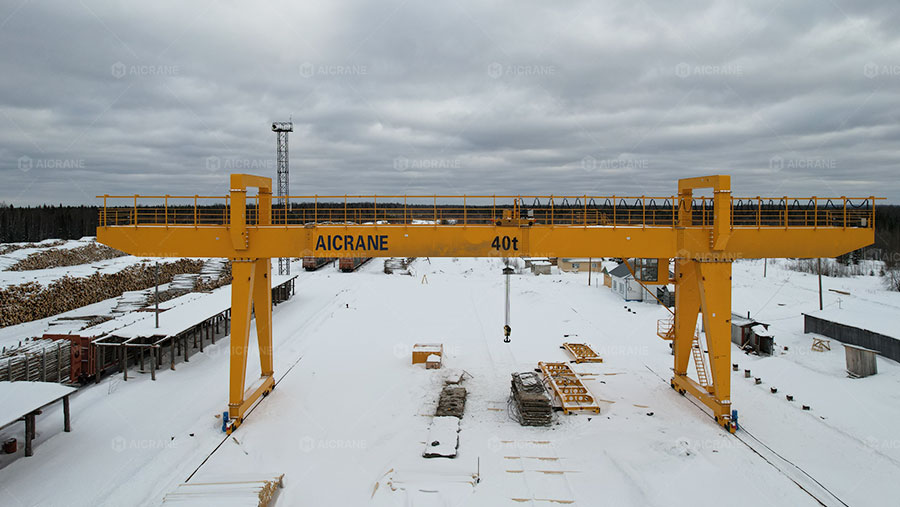
Climate and environment play a pivotal role in the performance and safety of heavy lifting equipment. In regions where temperatures routinely drop below freezing — such as Siberia, northern Europe, Alaska, and northern Canada – traditional structural steels may become brittle and prone to fracture. For heavy-duty equipment like a 40-ton gantry crane, structural integrity under low temperatures is paramount.
This article explores the rationale, material science, design requirements, manufacturing considerations, and field performance of low-temperature steel in 40 ton gantry crane structures, shedding light on how this specialized steel improves strength, reliability, and safety in cold environments.
1. Understanding Low-Temperature Steel
What Is Low-Temperature Steel?
Low-temperature steel – also called cryogenic steel or arctic steel – refers to a class of steels engineered to maintain ductility and toughness at sub-zero temperatures. Unlike conventional structural steel, which can experience a drastic decrease in impact resistance as temperatures drop, low-temperature steel retains its mechanical properties even at extreme cold.
This is achieved through controlled alloying and refined metallurgical processes that enhance fracture toughness – the ability of the steel to resist crack propagation under stress – at low thermal conditions.
Why Temperature Matters in Structural Steel
Steel’s ductility and toughness are influenced by temperature:
-
At higher temperatures, steel can deform without fracturing.
-
At low temperatures, some steels transition from ductile behavior to brittle behavior – a phenomenon known as the ductile-to-brittle transition.
For outdoor gantry cranes operating in cold climates, this transition temperature is critical. If the ambient temperature falls below the material’s transition point, the steel may fracture under shock loads or sudden stress.
2. Gantry Crane Structures and Cold Climate Challenges
What Is a 40-Ton Gantry Crane?
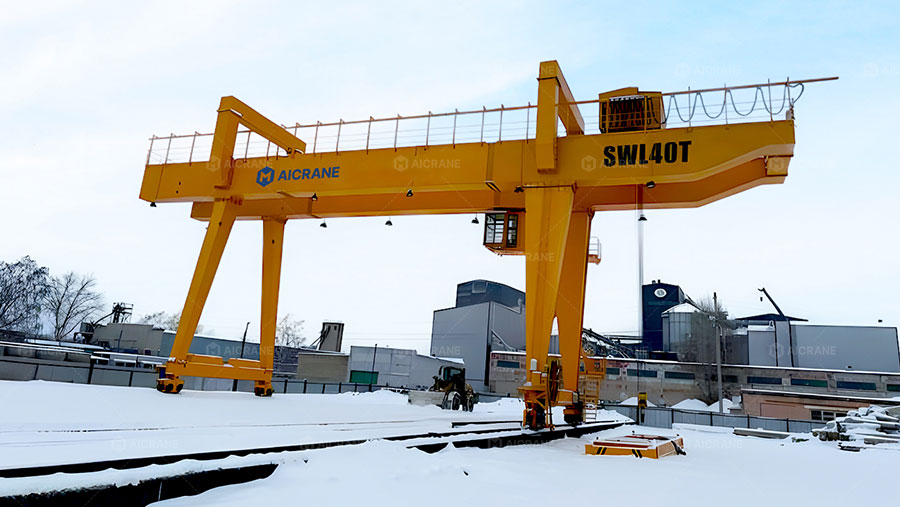
A 40-ton gantry crane is a heavy-duty lifting system typically used in outdoor yards, shipyards, container terminals, and industrial manufacturing plants. It consists of:
-
Main girders
-
End trucks
-
Legs
-
Bracing systems
-
Crane runway and support systems
Each structural component must endure static loads, dynamic impacts, wind forces, and thermal stresses – all of which are amplified in low-temperature environments.
Cold Climate Structural Challenges
In sub-zero environments, traditional steel components may face:
-
Reduced toughness — increasing risk of brittle fracture.
-
Thermal contraction — unwanted internal stresses.
-
Impact loading risk — increased susceptibility to crack initiation.
-
Fatigue under cyclic loads — accelerated by low temperatures.
Without proper material selection and design, a gantry crane can experience premature failure — a hazardous and expensive outcome.
3. Material Requirements for Low-Temperature Cranes
Steel Grades for Low-Temperature Use
Several steel grades are suitable for low-temperature crane structures. These grades are specified based on their Charpy V-notch impact energy at designated temperatures. Common examples include:
-
ASTM A514 / A517
-
EN10025 S355K / S355M
-
EN10025 S420ML / S460NL
-
Low-temperature variants of Q345 / Q390 (China)
These steels exhibit:
-
High impact toughness at −40 °C to −60 °C, sometimes even lower.
-
Good weldability, essential for large gantry components.
-
High yield and tensile strength, supporting heavy loads.
Design Codes and Standards
When specifying low-temperature steels, engineers reference:
-
EN 13001: Cranes – General design
-
ISO 19902 / ISO 20807
-
AWS D1.1 for welding procedures
-
National standards such as GB/T 722, GB/T 1591
These codes guide material testing (impact testing), allowable stress levels, welding requirements, and fabrication procedures.
Impact Toughness: Charpy Testing
In low-temperature applications, testing the steel’s fracture toughness at target temperatures is critical. A typical requirement might be:
-
27–34 J at −40 °C
-
40 J or more at −50 °C
This ensures the material can absorb shock without brittle failure.
4. Structural Benefits of Low-Temperature Steel Integration
Enhanced Ductility and Toughness
Low-temperature steels are engineered to maintain ductility in frost conditions. This means:
-
They deform before breaking.
-
They resist sudden brittle failure.
-
They absorb more energy under high loading rates.
In crane operations, where dynamic impacts are common, this property enhances safety.
Improved Fatigue Resistance
Cold environments cause thermal cycling, which can lead to fatigue cracking over time. Low-temperature steels, with their controlled microstructure, resist fatigue cracks better than ordinary carbon steels.
Reliable Welded Joints
Welding is integral to large structures like goliath gantry cranes. Low-temperature steels are often optimized for welding, reducing the risk of weld-induced brittleness.
Structural Integrity Under Shock Loads
A loaded crane engaging suddenly with a heavy item or experiencing impact from wind or equipment movement can exert shock loads. Low-temperature steels help prevent brittle fractures under such conditions.
5. Design Considerations for Cold Climate Gantry Cranes
Material Selection at the Planning Stage
When engineers design a 40-ton crane for cold regions, they must:
-
Define operating temperature range — Extreme minimum temperatures determine the material grade.
-
Determine impact energy requirements — Based on local climate data and safety factors.
-
Analyze load cases including dynamic and impact loads — Using finite element analysis (FEA) and other modeling tools.
Fabrication and Welding Protocols
Cold-rated steels can be more sensitive to welding heat input. Best practices include:
-
Pre-heating thicker sections before welding
-
Using appropriate filler metals with matching toughness
-
Controlled cooling to avoid residual stresses
-
Post-weld heat treatment (PWHT) when required
Inspection and Quality Control
Non-destructive testing (NDT) such as ultrasonic testing and radiography help ensure weld integrity. Regular inspection schedules are essential, especially for in-service structures in cold climates.
Thermal Protection Systems
In addition to steel choice, engineers may implement:
-
Thermal insulation on key structural zones
-
Anti-icing or de-icing systems
-
Heaters for critical joints
These features ensure consistent operation and reduce thermal shock.
6. Real-World Applications and Performance
Port and Container Terminals in Cold Regions
Many northern ports handle container operations in winter months. Low-temperature steel gantry cranes there must:
-
Operate reliably in −20 °C to −40 °C.
-
Withstand heavy wind and snow loads.
-
Support continuous, multi-shift liftting.
Steel selection helps reduce downtime and extend service life.
Industrial Yards and Mining Sites
In cold-climate mining regions (e.g., northern Scandinavia), gantry cranes support heavy equipment assembly and maintenance. Cold-resistant steel ensures equipment safety and reduces brittle failure risk.
Arctic Offshore Construction
Marine and offshore infrastructure in polar regions uses specialized gantry systems. Low-temperature steels are chosen for both structural members and supporting frames.
7. Challenges and Limitations
Cost Implications
Low-temperature steels can be more expensive due to alloying elements and testing requirements. However, investment is justified when weighed against:
-
Maintenance savings
-
Longer service life
-
Improved safety
Specialized Fabrication Expertise
Manufacturers working with cold-rated steels require skilled welders, precise control systems, and quality assurance processes.
Design Complexity
Designing for low temperatures adds complexity. Engineers must integrate thermal stresses, dynamic loads, and fatigue life into design models.
8. Conclusion
The application of low-temperature steel in 40-ton gantry crane structures is a critical engineering decision when working in sub-zero environments. By selecting steels with high fracture toughness and excellent ductility at low temperatures, gantry crane manufacturers and owners can improve operational reliability, reduce maintenance costs, and significantly enhance safety.
From port terminals in the Arctic to industrial sites in high latitudes, the need for specialized materials has reshaped how cranes are designed and fabricated. While there are challenges in cost and manufacturing expertise, the advantages of low-temperature steels – particularly in severe climates – make them a necessary choice for today’s heavy lifting infrastructure.
Engineers, project planners, and equipment providers must work collaboratively, leveraging advanced material science, rigorous design codes, and quality fabrication to ensure that cranes not only lift heavy loads but also withstand the harshest of climates.